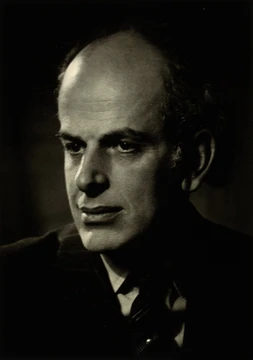
Karl Landsteiner
Austrian-American immunologist who classified blood groups and discovered Rhesus factor.

Karl Landsteiner was an Austrian-American biologist, physician, and immunologist. He distinguished the main blood groups in 1901, developing the modern system of classification of blood groups from his identification of the presence of agglutinins in the blood. In 1937, with Alexander S. Wiener, he identified the Rhesus factor, thus enabling physicians to transfuse blood without endangering the patient's life. With Constantin Levaditi and Erwin Popper, he discovered the polio virus in 1909. He received the Nobel Prize in Physiology or Medicine in 1930, and has been described as the father of transfusion medicine.
- born
- 14 June 1868
- died
- 26 June 1943
- field
- Biology, medicine, immunology
- nationality
- Austrian-American
- known_for
- Classification of blood groups, discovery of Rhesus factor, discovery of polio v
Verified Timeline
Lore & Background
Karl Landsteiner was born into a Jewish family in Vienna on 14 June 1868. His father Leopold, a renowned journalist and editor-in-chief of Die Presse, died when Karl was six, and he became very close to his mother Fanny. After graduating with the Matura exam from a Vienna secondary school, he studied medicine at the University of Vienna, writing his doctoral thesis in 1891. While still a student he published an essay on the influence of diets on the composition of blood. From 1891 to 1893, he studied chemistry in Würzburg under Hermann Emil Fischer, in München under Eugen Bamberger, and in Zürich under Arthur Rudolf Hantzsch. He converted from Judaism to Christianity in 1890, and was baptised into the Catholic Church. Returning to Vienna, Landsteiner became an assistant to Max von Gruber at the Hygienic Institute. From November 1897 to 1908 he was an assistant at the pathological-anatomical institute under Anton Weichselbaum, where he published 75 papers and performed some 3,600 autopsies. In 1909, with Erwin Popper, he discovered the infectious character of poliomyelitis and isolated the polio virus. In 1900 he found that blood of two people under contact agglutinates, and in 1901 identified the three blood groups A, B and O, which he labelled C. After World War I, he moved to the Netherlands, working as a prosector in The Hague and in a small factory producing old tuberculin. He emigrated with his family to New York in 1923 at age 55 to work for the Rockefeller Institute. In 1927 he discovered new blood groups M, N and P, and in 1937 identified the Rhesus factor with Alexander S. Wiener.
Reader's Guide
Karl Landsteiner's work fundamentally transformed transfusion medicine. By distinguishing the main blood groups in 1901 and later identifying the Rhesus factor in 1937 with Alexander S. Wiener, he provided the scientific basis for safe blood transfusions. His discovery of the polio virus in 1909 with Erwin Popper laid the groundwork for the fight against polio. Landsteiner received the Nobel Prize in Physiology or Medicine in 1930 for his blood group classification, and was posthumously awarded the Lasker Award in 1946. He is recognized as the father of transfusion medicine. Since 2005, World Blood Donor Day is celebrated on Landsteiner's birthday anniversary. In 1937, Landsteiner unsuccessfully initiated legal action against an American publisher who had included him in the book Who's Who in American Jewry, stating that 'it will be detrimental to me to emphasize publicly the religion of my ancestors.'
Did You Know?
- Landsteiner performed some 3,600 autopsies during his ten years at the pathological-anatomical institute in Vienna.
- He initially labelled the blood groups A, B and O as A, B and C.
- Landsteiner converted from Judaism to Christianity in 1890 and was baptised into the Catholic Church.
- In 1937 he unsuccessfully sued a publisher for listing him in Who's Who in American Jewry, saying it would be 'detrimental' to emphasize his ancestors' religion.
- World Blood Donor Day has been celebrated on Landsteiner's birthday anniversary since 2005.
Early Life and Formative Education
Karl Landsteiner entered the world on 14 June 1868 into a Jewish family in Vienna. His father Leopold (1818–1875), a renowned Viennese journalist and editor-in-chief of Die Presse, died at age 56 when Karl was 6. The boy became very close to his mother Fanny (née Hess; 1837–1908). After graduating with the Matura exam from a Vienna secondary school, he took up the study of medicine at the University of Vienna. Landsteiner wrote his doctoral thesis in 1891. While still a student he published an essay on the influence of diets on the composition of blood. From 1891 to 1893, Landsteiner studied chemistry in Würzburg under Hermann Emil Fischer, in München under Eugen Bamberger, and in Zürich under Arthur Rudolf Hantzsch. He had a number of publications from that period, some of them in co-operation with his professors.
The Blood Group Revolution
In 1900 Landsteiner found out that the blood of two people under contact agglutinates, and in 1901 he found that this effect was due to contact of blood with blood serum. As a result, he succeeded in identifying the three blood groups A, B and O, which he labelled C, of human blood. Landsteiner also found out that blood transfusion between persons with the same blood group did not lead to the destruction of blood cells, whereas this occurred between persons of different blood groups. Based on his findings, the first successful blood transfusion was performed by Reuben Ottenberg at Mount Sinai Hospital in New York in 1907. In 1930 Landsteiner was awarded the Nobel Prize in Physiology or Medicine in recognition of these achievements. For his pioneering work, he is recognized as the father of transfusion medicine.
A Decade of Prolific Research in Vienna
After returning to Vienna he became an assistant to Max von Gruber at the Hygienic Institute. In his studies he concentrated on the mechanism of immunity and the nature of antibodies. From November 1897 to 1908 Landsteiner was an assistant at the pathological-anatomical institute of the University of Vienna under Anton Weichselbaum, where he published 75 papers, dealing with issues in serology, bacteriology, virology and pathological anatomy. In addition he did some 3,600 autopsies in those ten years. Weichselbaum was Landsteiner's tutor for his postdoctoral lecture qualification in 1903. From 1908 to 1920 Landsteiner was prosector at the Wilhelminenspital in Vienna and in 1911 he was sworn in as an associate professor of pathological anatomy. During that time he discovered – in co-operation with Erwin Popper – the infectious character of poliomyelitis and isolated the polio virus. In recognition of this groundbreaking discovery, which proved to be the basis for the fight against polio, he was posthumously inducted into the Polio Hall of Fame at Warm Springs, Georgia, which was dedicated in January 1958.
Emigration, Later Discoveries, and Enduring Legacy
After World War I, Vienna and the new republic of Austria as a whole was in a desolate economic state, a situation in which Landsteiner did not see any possibilities to carry on with his research work. He decided to move to the Netherlands and accepted a post as prosector in the small Catholic St. Joannes de Deo hospital in The Hague and, in order to improve his financial situation also took a job in a small factory, producing old tuberculin. He also published a number of papers, five of them being published in Dutch by the Royal Academy of Sciences. So Landsteiner accepted the invitation that reached him from New York, initiated by Simon Flexner, to work for the Rockefeller Institute. He arrived there with his family in the spring of 1923. Throughout the 1920s Landsteiner worked on the problems of immunity and allergy. In 1927 he discovered new blood groups: M, N and P, refining the work he had begun 20 years before. Shortly thereafter, Landsteiner and his collaborator, Philip Levine, published the work. In 1937, with Alexander S. Wiener, he identified the Rhesus factor. He received the Aronson Prize in 1926. He was elected to the National Academy of Sciences in 1932, elected to the American Philosophical Society in 1935, and awarded the Cameron Prize for Therapeutics of the University of Edinburgh in 1937. He was elected a Foreign Member of the Royal Society (ForMemRS) in 1941. He died on 26 June 1943. He was posthumously awarded the Lasker Award in 1946.
More in Pioneers Of Modern Medicine 1-19
Spotted an error? Know more?
This is a living reference — every entry is fact-audited, and reader corrections feed straight into our audit queue. Suggest an edit · See this site's audit record