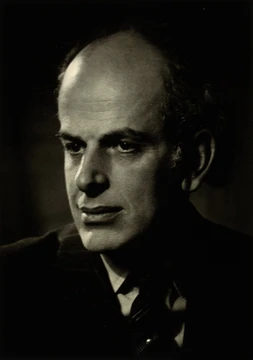
Howard Atwood Kelly
Gynecological surgeon and founding physician of Johns Hopkins School of Medicine.

Howard Atwood Kelly (1858–1943) was a gynecological surgeon credited with establishing gynecology as a specialty and among the first to use radium in the treatment of cancer. He was one of the founding physicians of the Johns Hopkins University School of Medicine, alongside pathologist William Henry Welch, internist William Osler, and surgeon William Stewart Halsted. The school opened in 1893 after a nationwide fundraising campaign led by Mary Elizabeth Garrett and the daughters of the original trustees, who insisted the school admit both men and women. Kelly's work helped shape the institution that became a model for modern medical education in the United States.
- born
- 1858
- died
- 1943
- field
- Gynecology
- known_for
- Founding physician at Johns Hopkins School of Medicine; establishing gynecology
Verified Timeline
Lore & Background
Howard Atwood Kelly (1858–1943) was one of the four founding physicians of the Johns Hopkins University School of Medicine when it opened in 1893. The school was the realization of a vision by Baltimore financier Johns Hopkins, who before his death in 1873 appointed a 12-member board of trustees to build a university and hospital linked by a medical school—a radical idea at the time. Construction of the Johns Hopkins Hospital began in 1877 on the site of a former mental asylum and took twelve years to complete. By the time the hospital opened in 1889, only six of the original trustees were still alive, and funds for the medical school had run out. Four of the trustees' daughters, led by Mary Elizabeth Garrett, launched a nationwide fundraising campaign, stipulating that the school admit both men and women. When the school opened in 1893, three women were in its first class. Kelly, a gynecological surgeon, joined Welch, Osler, and Halsted as the founding faculty, helping to establish the school's reputation for innovation.
Reader's Guide
Howard Atwood Kelly is significant as a founding physician of the Johns Hopkins University School of Medicine and as a gynecological surgeon credited with establishing gynecology as a specialty. He was among the first to use radium in the treatment of cancer, a pioneering step in oncology. His work was part of the school's broader history of groundbreaking medical research, which includes the first formal residency programs created by Osler and Halsted, the Blalock-Taussig procedure for blue baby syndrome, the first clinical description of autism by Leo Kanner in 1943, and the isolation of the HeLa cell line in 1951. The school, located on the Johns Hopkins Medical Campus in East Baltimore, shares its campus with the School of Nursing, Bloomberg School of Public Health, and Johns Hopkins Hospital. It is part of the larger Johns Hopkins Medicine system, which includes regional centers such as Johns Hopkins Bayview Medical Center, Howard County General Hospital, Suburban Hospital, Sibley Memorial Hospital, and Johns Hopkins All Children's Hospital.
Did You Know?
- Howard Atwood Kelly was one of the four founding physicians of the Johns Hopkins University School of Medicine when it opened in 1893.
- He is credited with establishing gynecology as a specialty.
- Kelly was among the first to use radium in the treatment of cancer.
- The school opened with three women in its first class, thanks to a fundraising campaign led by Mary Elizabeth Garrett and the daughters of the original trustees.
- Kelly's fellow founding physicians were William Henry Welch, William Osler, and William Stewart Halsted.
Architect of a New Medical Paradigm
Howard Atwood Kelly (1858–1943) was one of the four founding physicians of the Johns Hopkins University School of Medicine when it opened in 1893. The school was the realization of a vision by Baltimore financier Johns Hopkins, who before his death in 1873 appointed a 12-member board of trustees to build a university and hospital linked by a medical school—a radical idea at the time. Construction of the Johns Hopkins Hospital began in 1877 on the site of a former mental asylum and took twelve years to complete. By the time the hospital opened in 1889, only six of the original trustees were still alive, and funds for the medical school had run out. Four of the trustees' daughters, led by Mary Elizabeth Garrett, launched a nationwide fundraising campaign, stipulating that the school admit both men and women. When the school opened in 1893, three women were in its first class. Kelly, a gynecological surgeon, joined Welch, Osler, and Halsted as the founding faculty, helping to establish the school's reputation for innovation.
Defining a Specialty
Howard Atwood Kelly is credited with establishing gynecology as a specialty. As a gynecological surgeon at the newly founded Johns Hopkins University School of Medicine, he helped define a distinct field of practice within surgical medicine. This achievement was part of the school's broader mission of introducing many aspects of modern medical education in the United States. The school's founding in 1893 came at a time when the institution was still defining its identity, and the concept of a tightly linked university-hospital-medical school triad was considered radical. Kelly's role as one of the four founding physicians placed him at the center of an institution that would go on to produce landmark research, from the first formal residency programs created by his colleagues Osler and Halsted to countless subsequent breakthroughs.
Bringing Radium to the Battle Against Cancer
Howard Atwood Kelly was among the first physicians to use radium in the treatment of cancer. At a time when the Johns Hopkins University School of Medicine was still in its earliest years—having opened in 1893 just four years after the hospital itself was completed—Kelly's pioneering use of this new therapeutic tool placed him at the forefront of a medical revolution. The school's founding generation, which included Kelly alongside Welch, Osler, and Halsted, set a tone of aggressive innovation that would define the institution for generations. Kelly's work with radium was part of a broader pattern of groundbreaking research and breakthroughs that the Johns Hopkins School of Medicine has maintained throughout its history.
A Thread in the Fabric of Modern Medicine
Howard Atwood Kelly's life spanned from 1858 to 1943, a period that encompassed the very birth of the Johns Hopkins University School of Medicine and its emergence as a model for modern medical education. As a founding gynecological surgeon, he helped lay the groundwork for an institution that would later witness the creation of the first formal medical residency programs, the pioneering of the Blalock-Taussig procedure for blue baby syndrome, the first clinical description of autism by Leo Kanner in 1943, and the isolation of the HeLa cell line in 1951. Kelly's own contributions—establishing gynecology as a specialty and pioneering radium therapy for cancer—sit at the origin of this long chain of innovation. The school, located on the Johns Hopkins Medical Campus in East Baltimore alongside the hospital, Children's Center, Bloomberg School of Public Health, and School of Nursing, continues to operate within the broader Johns Hopkins Medicine system, which extends to regional centers in Howard County, Montgomery County, Washington, D.C., and St. Petersburg, Florida.
More in Pioneers Of Modern Medicine 1-19
Spotted an error? Know more?
This is a living reference — every entry is fact-audited, and reader corrections feed straight into our audit queue. Suggest an edit · See this site's audit record