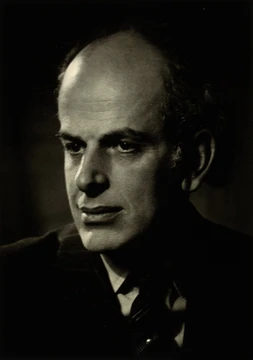
Jan Evangelista Purkyně
Czech anatomist and physiologist who discovered key cellular and sensory phenomena.

Jan Evangelista Purkyně (also written Johann Evangelist Purkinje; 17 or 18 December 1787 – 28 July 1869) was a Czech anatomist and physiologist. He coined the term 'protoplasma' for the fluid substance of a cell in 1839 and was one of the best known scientists of his time, so famous that letters from outside Europe addressed simply 'Purkyně, Europe' reached him.
- born
- 17 or 18 December 1787, Libochovice, Kingdom of Bohemia (Habsburg monarchy)
- died
- 28 July 1869
- field
- Anatomy and physiology
- nationality
- Czech (Kingdom of Bohemia, Habsburg monarchy)
- known_for
- Discovery of Purkinje cells, Purkinje fibres, Purkinje effect, Purkinje images,
Verified Timeline
Lore & Background
Purkyně was born in Libochovice in the Kingdom of Bohemia. After senior high school in 1804, he joined the Piarists order as a monk but left 'to deal more freely with science.' He graduated from the University of Prague with a medical degree in 1818 and became a Professor of Physiology there. He discovered the Purkinje effect (reduced sensitivity to dim red light) and published descriptions of entoptic phenomena in 1823. His two volumes on sensory physiology contributed to experimental psychology. In 1839 he created the world's first Department of Physiology at the University of Breslau, and in 1842 the world's second official physiology laboratory. He also founded the Literary-Slav Society there. In 1850 he accepted the Physiology chair at Prague Medical Faculty, holding it until his death. Purkyně is best known for discovering Purkinje cells (large cerebellar neurons, 1837) and Purkinje fibres (cardiac conductive tissue, 1839). He also described Purkinje images (reflections from eye structures) and the Purkinje shift (change in color brightness at dusk). He introduced the terms 'plasma' (blood component) and 'protoplasm' (cell substance). He was the first to use a microtome for thin tissue slices and among the first to use an improved compound microscope. In 1829 he described effects of camphor, opium, belladonna, and turpentine on humans, and experimented with nutmeg, experiencing headaches, nausea, euphoria, and hallucinations. He discovered sweat glands in 1833 and published a thesis on nine fingerprint configuration groups in 1823. In 1838 he first described neuromelanin in the substantia nigra. He invented the compressorium for microscopy. He also constructed a stroboscope called forolyt, using nine photos of himself to entertain his grandchildren. In 1827 he married Julia Agnes Rudolphi, daughter of naturalist Karl Rudolphi. They had two daughters and two sons; his wife and daughters died of cholera in Wrocław. His older son Emanuel became a naturalist, younger son Karel a painter. Purkyně died on 28 July 1869 and is buried at Vyšehrad Cemetery in Prague.
Reader's Guide
Jan Evangelista Purkyně's significance lies in his wide-ranging contributions across anatomy, physiology, and sensory science. His discoveries—Purkinje cells, Purkinje fibres, the Purkinje effect, Purkinje images, and the Purkinje shift—remain fundamental in neuroscience, cardiology, and vision science. He coined the terms 'protoplasm' and 'plasma,' foundational to cell biology and hematology. His early use of the microtome and improved compound microscope advanced histology, while his invention of the compressorium aided microscopic observation. His 1823 fingerprint classification anticipated modern forensic science. His sensory experiments, including self-experimentation with nutmeg, contributed to experimental psychology. By founding the first Department of Physiology (1839) and second official physiology laboratory (1842), he institutionalized the discipline. His fame was such that letters addressed only 'Purkyně, Europe' reached him. His legacy is commemorated by the Jan Evangelista Purkyně University in Ústí nad Labem, the lunar crater Purkyně, and asteroid 3701 Purkyně. Masaryk University bore his name from 1960 to 1990, and a military medical academy in Hradec Králové did so from 1994 to 2004.
Did You Know?
- Purkyně coined the term 'protoplasma' for the fluid substance of a cell in 1839.
- He was the first to use a microtome to make thin slices of tissue for microscopic examination.
- In 1823 he published a thesis recognising nine principal configuration groups of fingerprints.
- He experimented with nutmeg in 1829, washing down three ground nutmegs with wine and experiencing headaches, nausea, euphoria, and hallucinations that lasted several days.
- His fame was such that letters from outside Europe addressed simply 'Purkyně, Europe' reached him.
Anatomical & Physiological Discoveries
Few nineteenth-century scientists left their fingerprints on so many corners of human biology as Purkyně did. In 1837 he identified the large, heavily branched neurons nestled in the cerebellum that we now call Purkinje cells, and the following year he mapped the fibrous network—Purkinje fibres—that carries electrical signals from the atrioventricular node throughout the heart's ventricles. His work on vision produced the Purkinje shift, describing how red and blue hues change in perceived brightness as ambient light fades at dusk, alongside the Purkinje images formed by reflections off ocular structures. He also introduced the scientific vocabulary for plasma, the cell-free component of blood, and protoplasm, the living substance within cells, a term he coined in 1839. In 1833 he identified sweat glands, and in 1838 he became the first to describe and illustrate neuromelanin, the intracytoplasmic pigment found in the substantia nigra. Even as early as 1823 he published a thesis recognising nine principal groups of fingerprint configurations, and his two-volume treatise on the physiology of the senses helped lay groundwork for what would become experimental psychology.
Pioneering Methods & Institutional Building
Beyond his discoveries, Purkyně reshaped how physiology was practised and taught. He was the first scientist to employ a microtome, slicing tissue into paper-thin sections suitable for microscopic examination, and he was among the earliest researchers to work with an improved compound microscope. He also devised the compressorium, a small accessory that allowed a controlled pressure to be applied to a specimen while it was under observation, giving microscopists a new tool for manipulating samples. Institutionally, his impact was equally transformative: in 1839 he established what is recognised as the world's first dedicated Department of Physiology at the University of Breslau in Prussia, and three years later he opened the world's second official physiology laboratory. At Breslau he also helped found the Literary-Slav Society, linking his scientific career to broader cultural life. In 1850 he returned to his homeland, accepting the Physiology chair at the Prague Medical Faculty, a post he held until his death in 1869.
Life Beyond the Laboratory
Purkyně's personal story carried both warmth and tragedy. Born in the small Bohemian town of Libochovice in 1787, he briefly entered the Piarist monastic order after finishing secondary school in 1804, but soon departed, explaining that he wished to engage with science more freely. In 1827, at forty, he married Julia Agnes Rudolphi, daughter of the Swedish-born German naturalist Karl Rudolphi, who had been a supporter of his work. The couple had two sons and two daughters, but a cholera outbreak in Wrocław claimed the lives of his wife and both daughters, leaving him to raise his two boys alone. His elder son Emanuel went on to become a naturalist, while the younger, Karel, pursued painting. Even in old age, Purkyně retained a playful curiosity: he built his own stroboscope, which he called a forolyt, mounted nine photographs of himself taken from different angles onto a disc, and delighted his grandchildren by spinning it so the young professor appeared to rotate at great speed. He was ultimately laid to rest at the Vyšehrad Cemetery in Prague.
Fame & Enduring Legacy
Purkyně's renown during his lifetime was extraordinary. He was regarded as one of the most celebrated scientists of his era, and his fame reached such a level that correspondents writing from outside Europe could simply address their letters to "Purkyně, Europe" and be confident the mail would find its way to him. That recognition has endured well beyond the nineteenth century. Masaryk University in Brno carried his name from 1960 to 1990, and a military medical academy in Hradec Králové bore it from 1994 to 2004. Today, the university in Ústí nad Labem is formally known as Jan Evangelista Purkyně University. His influence also extends into the cosmos: a crater on the Moon and the asteroid 3701 Purkyně both carry his name. In the sciences themselves, his contributions to experimental psychology, his early pharmacological observations on substances such as camphor, opium, belladonna, and turpentine, and his 1829 self-experiment with nutmeg—recording headaches, nausea, euphoria, and multi-day hallucinations—continue to be cited as foundational references in their respective fields.
More in Pioneers Of Modern Medicine 1-19
Spotted an error? Know more?
This is a living reference — every entry is fact-audited, and reader corrections feed straight into our audit queue. Suggest an edit · See this site's audit record