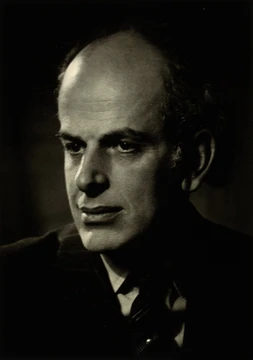
Jonas Salk
Founder of the Salk Institute and developer of the polio vaccine.

Jonas Salk founded the Salk Institute for Biological Studies in 1963 in the La Jolla community of San Diego, California. He is best known as the developer of the polio vaccine. The independent, non-profit institute was founded in 1960, with construction beginning in spring 1962. Salk served as the institute's founding director and resident fellow, and his own laboratory group focused on the immunologic aspects of cancer and mechanisms of autoimmune disease such as multiple sclerosis.
- known_for
- Developing the polio vaccine
Verified Timeline
Lore & Background
Jonas Salk founded the Salk Institute for Biological Studies in 1963 in the San Diego neighborhood of La Jolla. He believed the institution would help new and upcoming scientists along in their careers, saying, 'I thought how nice it would be if a place like this existed and I was invited to work there.' The National Foundation for Infantile Paralysis, known today as the March of Dimes, provided the initial funding. In 1966, Salk described his 'ambitious plan for the creation of a kind of Socratic academy where the supposedly alienated two cultures of science and humanism will have a favorable atmosphere for cross-fertilization.' The institute's architect, Louis Kahn, installed blackboards in place of concrete facings on the walls along the walks to prepare for Socratic encounters. Salk held the titles of founding director and resident fellow, and his own laboratory group was concerned with the immunologic aspects of cancer and the mechanisms of autoimmune disease, such as multiple sclerosis. In an interview, he said, 'In the end, what may have more significance is my creation of the institute and what will come out of it, because of its example as a place for excellence, a creative environment for creative minds.'
Reader's Guide
Jonas Salk's founding of the Salk Institute in 1963 marked the creation of a research complex for the investigation of biological phenomena 'from cell to society.' The institute was built on land on the Torrey Pines Mesa granted by the city of San Diego after a referendum in June 1960. Construction began in 1962, and a handful of researchers moved into the first laboratory in 1963. Additional buildings housing more laboratories and administrative offices were constructed in the 1990s, designed by Anshen & Allen. A golden engraving at the entrance bears Salk's words: 'Hope lies in dreams, in imagination and in the courage of those who dare to make dreams into reality.' Francis Crick held the post of J. W. Kieckhefer Distinguished Research Professor at the institute until his death in 2004. The institute also served as the basis for Bruno Latour and Steve Woolgar's 1979 book Laboratory Life: The Construction of Scientific Facts.
Did You Know?
- Jonas Salk founded the Salk Institute in 1963 in the San Diego neighborhood of La Jolla.
- The institute's architect, Louis Kahn, installed blackboards on the walls along the walks to encourage Socratic encounters.
- Francis Crick held the J. W. Kieckhefer Distinguished Research Professor position at the Salk Institute until his death in 2004.
- A golden engraving at the institute's entrance bears Salk's words: 'Hope lies in dreams, in imagination and in the courage of those who dare to make dreams into reality.'
- The Salk Institute served as the basis for Bruno Latour and Steve Woolgar's 1979 book Laboratory Life: The Construction of Scientific Facts.
Founding Vision and Philosophical Ambition
Jonas Salk founded the institute in 1963 in the San Diego neighborhood of La Jolla. He believed the institution would help new and upcoming scientists along in their careers, as he said himself, 'I thought how nice it would be if a place like this existed and I was invited to work there.' Many supporters, in particular the National Foundation, 'helped him build his dream of a research complex for the investigation of biological phenomena "from cell to society."' In 1966, Salk described his 'ambitious plan for the creation of a kind of Socratic academy where the supposedly alienated two cultures of science and humanism will have a favorable atmosphere for cross-fertilization.' Author and journalist Howard Taubman explained that Salk had not lost sight of the institute's immediate aim: the development and use of the new biology, called molecular and cellular biology, described as part physics, part chemistry and part biology. Dr. Salk hoped that the institute would do its share in probing the wisdom of nature and thus help enlarge the wisdom of man, for the ultimate purpose of science, humanism and the arts, in his judgment, is the freeing of each individual to cultivate his full creativity. As if to prepare for Socratic encounters, the institute's architect, Louis Kahn, installed blackboards in place of concrete facings on the walls along the walks.
Research Scope, Funding, and Institutional Standing
As of October 2020, the Salk Institute employs 850 researchers in 60 research groups and focuses its research in three areas: molecular biology and genetics; neurosciences; and plant biology. Research topics include aging, cancer, diabetes, birth defects, Alzheimer's disease, Parkinson's disease, AIDS, and the neurobiology of American Sign Language. March of Dimes provided the initial funding and continues to support the institute. Research is funded by a variety of public sources, such as the US National Institutes of Health and the government of California; and private organizations such as Paris-based Ipsen, the Howard Hughes Medical Institute and the Waitt Family Foundation. In addition, the internally administered Innovation Grants Program encourages cutting-edge high-risk research. In 2017 the Salk Institute Trustees elected former president of Booz Allen Hamilton, Daniel C. Lewis, as board chairman. The Salk Institute consistently ranks among the top institutions in the US in terms of research output and quality in the life sciences.
Distinguished Figures and Campus Milestones
Among the founding consultants were Jacob Bronowski and Francis Crick. Francis Crick held the post of J. W. Kieckhefer Distinguished Research Professor at the Salk Institute. His later research centered on theoretical neurobiology and attempts to advance the scientific study of human consciousness. He remained in this post at the Salk Institute until his death in 2004. Salk and architect Louis I. Kahn approached the city of San Diego in March 1960 about a gift of land on the Torrey Pines Mesa and were granted their request after a referendum in June 1960. Construction began in 1962 and a handful of researchers moved into the first laboratory in 1963. Additional buildings housing more laboratories as well as the organizational administrative offices were constructed in the 1990s, designed by Anshen & Allen. A golden engraving at the entrance of the institute honors Jonas Salk, bearing the words: 'Hope lies in dreams, in imagination and in the courage of those who dare to make dreams into reality.' From April 22 to 27, 2010, the Salk Institute hosted glass sculptures by artist Dale Chihuly to celebrate 50 years of its inception. The event was underwritten by Irwin Jacobs, past chairman of the board of trustees.
Controversies and Institutional Challenges
In July 2017, three of the Salk Institute's senior female scientists, biochemists Beverly M. Emerson and Katherine Jones, and molecular biologist Victoria Lundblad, each filed separate gender discrimination lawsuits against the institute in state court. They alleged that Salk operated as an 'old boys' club' in which a group of senior male faculty limited women's access to promotions, funding and laboratory resources, while male colleagues gained influence and received private donations. The lawsuits led to the retirement of Salk president Elizabeth Blackburn in the summer of 2018, and the resignation of board chairman Ted Waitt. In April 2018, Salk placed cancer biologist Inder Verma, previously named in the lawsuits, on administrative leave and launched an independent investigation after Science reported further sexual harassment allegations against him from eight women in incidents spanning four decades. One professor, Pamela Mellon, said she had reported an incident to Salk's human resources department in the late 1980s and had been told not to share her account with others. Verma denied all allegations and resigned on June 6, 2018. Jones and Lundblad settled their discrimination suits confidentially in August 2018, retaining their positions; Emerson, who had left Salk in 2017, settled separately in November 2018. The institute admitted no liability in any of the settlements.
More in Pioneers Of Modern Medicine 1-19
Spotted an error? Know more?
This is a living reference — every entry is fact-audited, and reader corrections feed straight into our audit queue. Suggest an edit · See this site's audit record