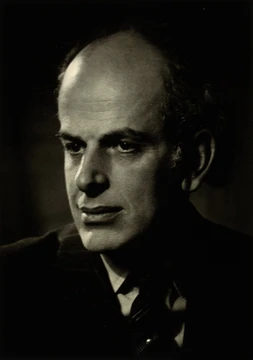
Jan Baptist van Helmont
Chemist, physiologist, and physician from Brussels; coined 'gas'.

He worked during the years just after Paracelsus and the rise of iatrochemistry, and is sometimes considered to be 'the founder of pneumatic chemistry'. Van Helmont is remembered today largely for his 5-year willow tree experiment, his introduction of the word 'gas' (from the Greek word chaos) into the vocabulary of science, and his ideas on spontaneous generation.
- field
- Chemistry, physiology, medicine
- nationality
- Brussels (Spanish Netherlands)
- known_for
- Willow tree experiment, coining 'gas', founder of pneumatic chemistry, spontaneous generation ideas
Lore & Background
Jan Baptist van Helmont was the youngest of five children of Maria (van) Stassaert and Christiaen van Helmont, a public prosecutor and Brussels council member. He was educated at Leuven, and after ranging restlessly from one science to another and finding satisfaction in none, turned to medicine. He interrupted his studies and traveled through Switzerland, Italy, France, Germany, and England. They lived in Vilvoorde, near Brussels, and had six or seven children. Van Helmont was a disciple of Paracelsus, though he scornfully repudiated the errors of most contemporary authorities, including Paracelsus. He engaged in the new learning based on experimentation. He likely never conducted the trial. He was a careful observer of nature; his analysis of data suggests he had a concept of the conservation of mass. For van Helmont, air and water were the two primitive elements; fire he denied as an element, and earth could be reduced to water. He perceived that his 'gas sylvestre' (carbon dioxide) given off by burning charcoal was the same as that produced by fermenting must. He wrote extensively on digestion, proposing that it was aided by a chemical reagent or 'ferment' within the body, and described six different stages of digestion. He described a recipe for the spontaneous generation of mice (dirty cloth plus wheat for 21 days) and scorpions (basil between bricks in sunlight). Van Helmont had frequent visions throughout his life and laid great stress upon them. His choice of a medical profession has been attributed to a conversation with the angel Raphael.
Reader's Guide
Van Helmont's significance lies in his bridging of alchemical tradition and experimental science. He is considered the founder of pneumatic chemistry for recognizing that gases are distinct from atmospheric air and for coining the term 'gas'. His willow tree experiment is a milestone in quantitative biology, demonstrating an early concept of conservation of mass by attributing plant growth to water. His proposal of a randomized controlled trial for testing fever treatments was a pioneering methodological idea, though likely never executed. His work on digestion, proposing a chemical 'ferment', anticipated the concept of enzymes. At the same time, his belief in spontaneous generation and mystical elements such as the archeus and blas reflect his continued ties to alchemical and religious thought. His prosecution by the Inquisition for his writings on sympathetic principles highlights the tension between emerging empirical science and established authority. His posthumously published Ortus Medicinae collected his works and influenced later chemists and physiologists. Van Helmont's legacy is that of a transitional figure who advanced experimental methods and chemical concepts while retaining a worldview shaped by mysticism and alchemy.
Did You Know?
- Van Helmont coined the word 'gas' from the Greek word chaos.
- He proposed a randomized controlled trial to compare his fever treatment with Galenic bloodletting and purging, but likely never conducted it.
- He described a recipe for the spontaneous generation of mice using a dirty cloth and wheat over 21 days.
More in Pioneers Of Modern Medicine 1-19
Spotted an error? Know more?
This is a living reference — every entry is fact-audited, and reader corrections feed straight into our audit queue. Suggest an edit · See this site's audit record